

Creativity is basically free now; strategy is what still costs something
Luna Bar, Ladder, and McCormick are all running the same play—and there’s a lot to be learned in the brand awareness lane

🪩 Volume 137 | May 20, 2026
This week, we’re doing something a little different. I don’t have a campaign deep-dive for ya, but I do have a lot of opinions.
Let’s get into it.
--
This week’s read time: 4-5ish mins
For you skimmers: 2 mins (hit the bold headers and bullet points)
1. The “Official Apology” ad is officially dead to me.
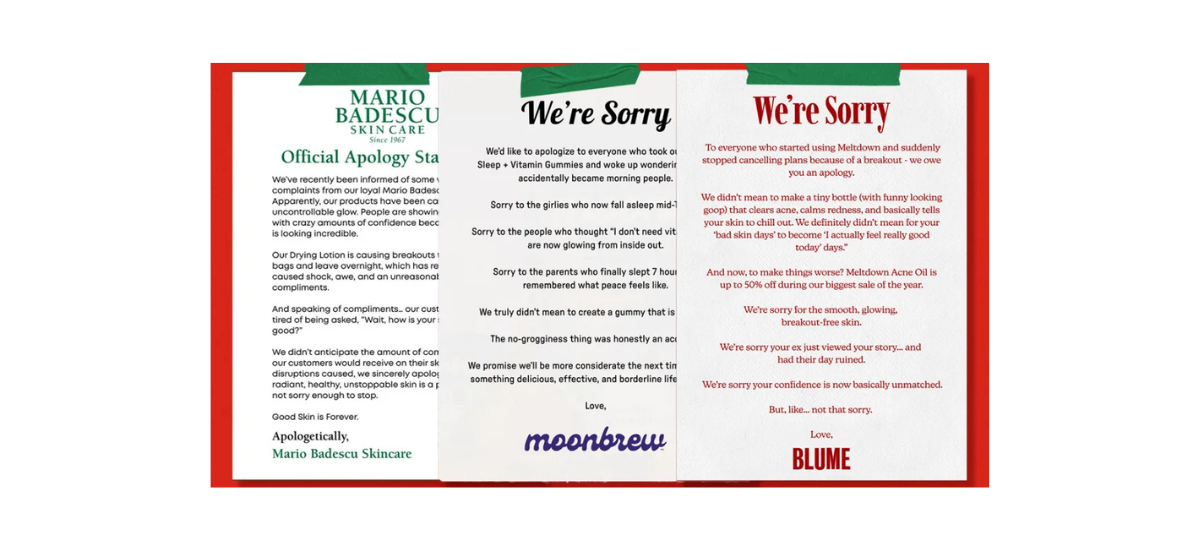
You’ve seen it: A brand posts what looks like a formal corporate statement—serious letterhead, with bold text, “OFFICIAL APOLOGY” or “WE’RE SORRY” at the top—and you stop scrolling for half a second thinking wait, what happened? And then you realize: they’re not sorry. They’re just sorry their product is SO good you can’t stop buying it. UGH YAWN.
This trend reportedly started as an internet meme in the Philippines in 2024 and exploded globally right before Black Friday 2025. And at first, sure, kind of charming… a clever little scroll-stopper. But then every single brand did it. Sleep gummies, ice cube brands, every kids clothing brand I know. Your LOCAL CANDLE COMPANY. A retention marketing manager at Milk Bar put it perfectly on LinkedIn: “It’s starting to feel less like clever marketing and more like everyone submitting the same homework.”
NOW, I scroll past every single one.
The apology ad worked for a minute there because it felt unexpected. The second it became a template, it went from eye-catching to annoying. That’s the lifecycle of every borrowed marketing format—and it’s a sign that your audience is smarter and faster than the trend cycle. They catch on, and they absolutely tune out.
I’m sick of the new Olivia Rodrigo song because of this.
Trends aren’t the bad guy here.
If your marketing playbook is just “find what’s working and copy it“ you’ve guaranteed yourself a permanent spot in second place.
Takeaway: Do trends differently. Aim to be the trendsetter instead of the early adopter, or worse, the last follower. Take permission from the bold ideas to try something that seems a bit “out there.”
2. “Sustainable” and “healthy” are table stakes now. Not selling points.
If you are a CPG or product-based brand and your primary marketing message is that you’re sustainable, clean, non-toxic, or “a healthier alternative”—I need you to hear me: that is the floor, and you’re laying on it. Consumers expect better choices now. It’s not a differentiator anymore; it’s the cost of being taken seriously. Don’t mistake your sustainability & cleanliness for the ceiling—note how they even sound meh in this sentence. Because they are.
The same goes for technology. We live in a world where building a beautiful app, launching an e-commerce store, or automating your customer journey is more accessible than it’s EVER been. Technology is another baseline. An app doesn’t wow anyone anymore—it just means people can avoid your frustrating website.
So what IS a differentiator in 2026? Pristine clarity, an unapologetic point of view, and a brand that knows exactly who it’s talking to and makes that person feel like the product was made specifically for them.
Takeaway: Wtf are you doing here? If you can’t tell me why your brand exists, who you serve, and how you’re different—get in a room with your team ASAP and figure it out quickly. Then do everything from that perspective.
3. Creativity is at our fingertips—and I think it’s becoming a problem.
I say this as someone who uses every tool available to me.
The internet, AI, Canva, templates, trend reports—all of it has made creativity radically accessible. Which is yeah, exciting. But I also think it’s producing a LOT of content and marketing in general that looks good and means nothing.
You think it looks good, you click post, send, or share. Check, and check. Done, and done. But there’s no real strategy underneath it, no reason it’s going to hold up six months (or six minutes) from now when the aesthetic you borrowed has cycled out.
What this creative accessibility is eclipsing for us all (big yikes) is the ability to sit with a half-formed idea long enough to figure out what it actually is. To ask why before you ask how.
Takeaway: anyone can make something attractive (yup, I said it)—but the skill lies in making something meaningful, thought provoking, action-inspiring. The stuff that makes people perk up and do something. Pretty graphics don’t do that. Truly creative thinking does.
🏗️ A little BTS sounds fun, dontcha think?
I work with a lot of brands. And the ones that are struggling to maintain their momentum almost always have the same problem: they don’t have a clear enough answer to the question “who are we, and who are we for?” (They can typically answer “what” and “why” with a way-too-granular, way-too-close-to-the-product answer that would leave their ideal audience saying, “sounds interesting” right before clicking over to something they understand without working so damn hard.)
They have a great product, but their marketing feels scattered because their brand foundation is still a lil fuzzy. They’re making decisions without a true north star to anchor them.
This is such a common problem. And where we see a lot of brands/marketing teams fall flat.
It is THE stickiest problem in brand-building, and it’s the one we built our Brand Diagnostic to solve.
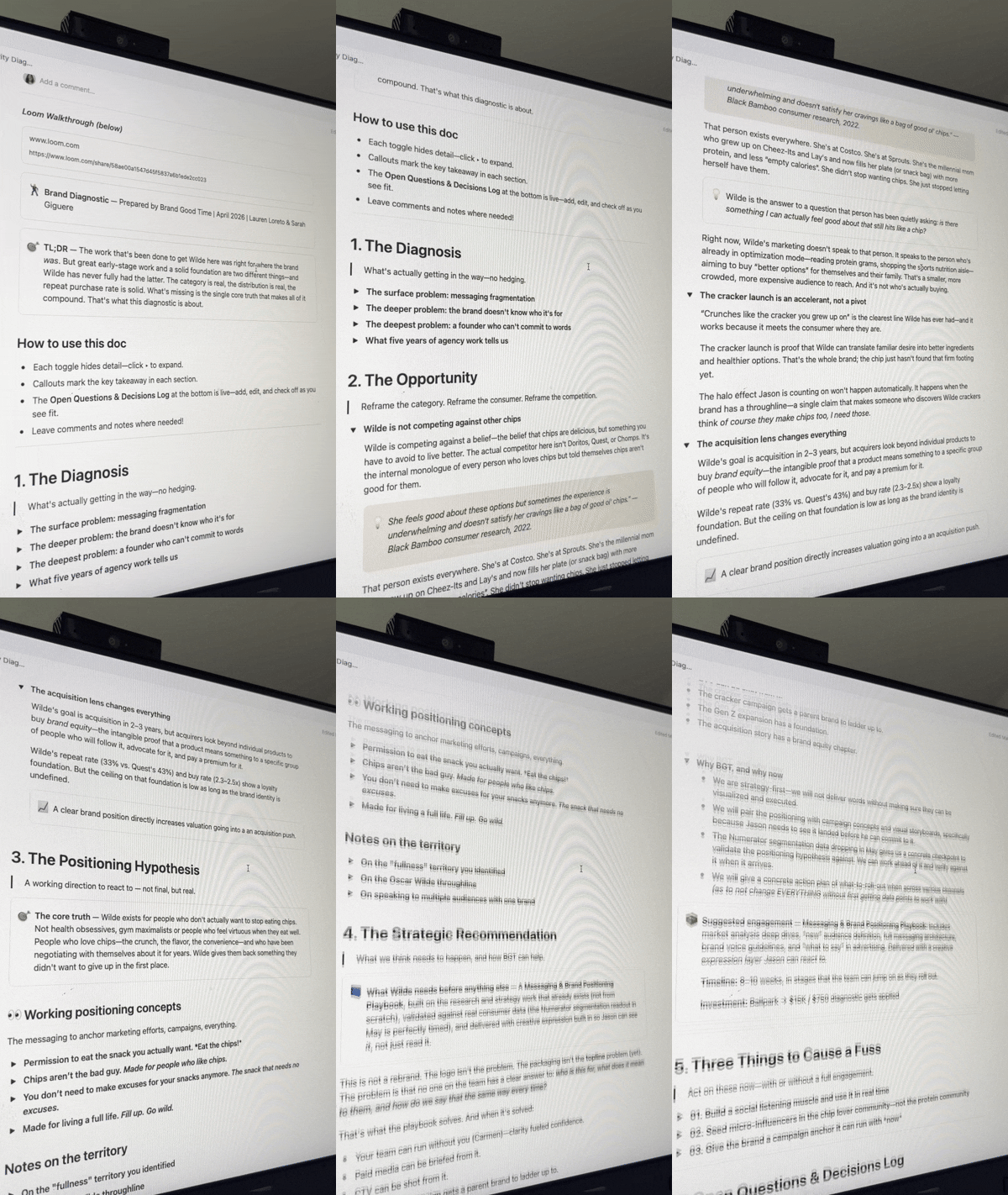
Here’s what it is: a $1,000 service that includes an intake form, a 1:1 session with us, and a written diagnostic delivered to you as a tangible deliverable. It’s a focused intervention on your most pressing brand problem—how you talk about what you do, who you’re selling to, and what marketing is actually going to move the needle for you right now.
We’ve had brands come through the diagnostic and walk away with:
A brand purpose that anchored two upcoming product launches—so their whole team had a north star for what every piece of marketing should connect back to.
Clarity on how to market a truly one-of-one product—which is one of the hardest problems in brand strategy, because you can’t just look at what your competitors are doing. You have to build the framework yourself.
A reframe of how their marketing team fits into the business—shifting from “this is what we spend on marketing” to “this is how marketing makes us money.” That distinction sounds simple. (It is in fact, not simple). And getting there required getting really clear on what the brand was actually trying to do.
The diagnostic is specifically for founders and brands with a proven product or service—meaning you have paying customers and data to work with. You’re not starting from zero, you’re just stuck in the middle, which is honestly the hardest place to be.
If you’ve been nodding along to any of this—the “hot takes” above, the question of what actually makes you different—this might be exactly the thing you need.
Grab your brand diagnostic here OR fill out our contact form to set up a call first
Moments from this last week I can’t stop thinking about:
How every pre-roll ad on YouTube right now is (poorly) AI GENERATED COMPLETELY (WHY)
Kacey Musgraves performing on stage at the ACM’s. She’s the Sabrina Carpenter of the Country Music world now I GUESS
This really cute Summer Fridays activation in Miami last weekend
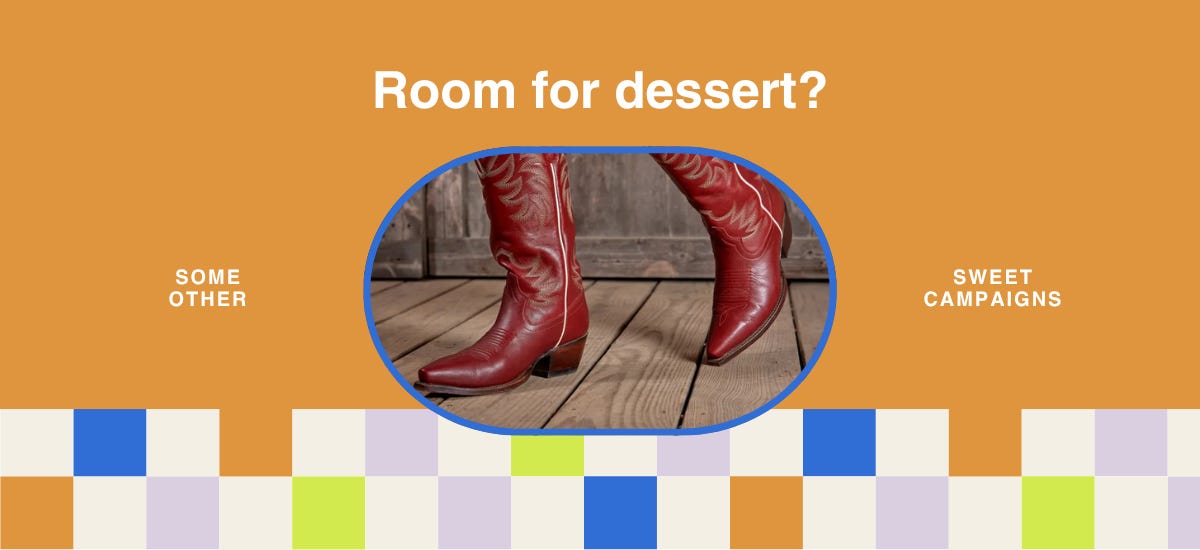
After finding out about Tecovas for the first time during the Super Bowl, I finally tried on a pair of red Annie’s when I was in Texas last weekend and WILL be asking for them for Christmas (size 9 in case you’re feeling generous)
Something to sit with: We are in the most “creative,” most accessible, most overwhelming moment in the history of marketing. You “win” this era by being willing to slow down long enough to figure out what you stand for and rooting every decision you make in that.
Til the next cake drop,
🍰 Lauren
Wanna sponsor? Let’s partner up!
Connect with me on LinkedIn, I’m fun there, too → linkedin.com/in/laurenloreto